Volume 8, No. 10, October 2026
Editor: Rashed Rahman
The Material Basis of a Spectre: Why China’s Youth Are Rediscovering Mao
Yinhao Zhang
 A Spectre’s Return
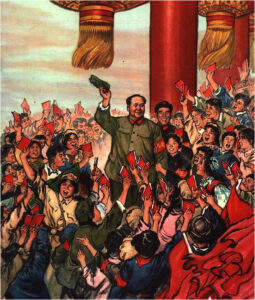
A spectre is haunting China – Mao Zedong. This is not the ossified image of the national founder found in official party histories, but a living, breathing idea rediscovered by the country’s youth. The evidence for this resurgence is both unexpected and unmistakable, and its most dramatic stage is China’s elite universities, where the country’s political, academic, and business leadership is cultivated.
To grasp the significance of this shift, one must first understand the intellectual climate it has displaced. For decades after the market reforms began in 1978, and despite a persistent positive view of Mao and the Cultural Revolution among many workers and peasants, the prevailing attitude toward Mao among the educated class was one of deep scepticism.1 An official survey from 1993, jointly conducted by several Party and state research bodies, provides a clear measure of this sentiment. When respondents were asked to evaluate Mao, only eight percent of senior intellectuals believed his merits outweighed his faults, while a staggering 67 percent held the opposite view. Among university staff and students, 40 percent believed his faults were greater, more than the 34 percent who agreed with the official “70 percent good, 30 percent bad” verdict. Furthermore, when these same elites were asked about the grassroots “Mao fever” already emerging at the time, an overwhelming majority – between 63 and 72 percent of those surveyed – dismissed it as an “abnormal” phenomenon, viewing it as a product of popular ignorance.2 This view prevailed among the educated elite after 1978: Mao was a figure of the past whose legacy was seen as an obstacle to modernisation.
By 2006, the tide had begun to turn. A survey at Sun Yat-sen University, a top-tier institution, revealed a generational shift. Among students born during the economic boom, the 1993 consensus had significantly weakened. Now 47 percent believed Mao’s merits outweighed his faults, while only six percent held the opposite view. This was a quiet reappraisal, however, not a full-throated endorsement of his entire political project. The same students remained overwhelmingly critical of the Cultural Revolution, with nearly 90 percent viewing it as negative.3 They were beginning to separate Mao the nation-builder from Mao the radical.
What was once a gradual shift has accelerated dramatically since 2016. Library loan data provides a clear and intuitive indicator. At Tsinghua University, China’s most prestigious institution, the Selected Works of Mao Zedong went from not even ranking in the top fifty library loans in 2016 to rising to the number one spot by 2019 – a position it has held every year through 2024.4 This is not an isolated case. A 2020 survey by MyCOS found the trend present in the top ten loan lists of 13 of the 80 universities it surveyed, most of them top-tier institutions.5 By my own verification of the latest available data, in 2024, the Selected Works topped the annual library loan list at all of China’s top four universities: Tsinghua, Peking, Fudan, and Shanghai Jiao Tong.
A case worth special mention is that of Beihang University, one of China’s top science and engineering institutions. In 2020, the university’s official account on Douyin (the Chinese version of TikTok) posted its annual library loan list, prompting hundreds of comments and shares. The list revealed that the most borrowed book was the standard Selected Works of Mao Zedong, and the second most borrowed was its Volume V.6 This detail is crucial. The official, post-1978 version of the Selected Works includes only the first through fourth volumes, which consists of Mao’s writings before 1949. A fifth volume, compiled during the Cultural Revolution and published in 1977, covers the 1949-1957 period. However, it was effectively suppressed after 1978 for its radical content and direct criticism of Deng Xiaoping, making it a de facto banned book. The text is a rarity and most university libraries do not even carry it. The active pursuit of this volume by students thus suggests that students are deliberately pursuing Mao’s most radical period of thought.
Reports on this trend have started to appear in Western media, though their analyses often misdiagnose its roots. The prevailing explanation tends to attribute it to a top-down ideological campaign by the state. A more in-depth piece in The New York Times connects the trend to rising wealth inequality, but it frames the turn to Mao primarily in negative terms. The article framed Mao’s words as providing a rationale for the rise of irrational resentment toward the affluent during times of economic downturn.7 What these explanations miss is the most crucial element: the vanguard of this ‘Mao fever’ consists of students and recent graduates from China’s top universities.
These students are generally sceptical of official propaganda. They have access to a wide range of information, both from within and outside China, and many are trained to think critically. Their turn to Mao is not the result of indoctrination or irrational resentment; it is a conscious intellectual and political choice. The spontaneous character of this trend, emerging from within this well-educated group, is best illustrated by its collision with China’s liberal-leaning digital platforms. On Zhihu, a forum popular with this very demographic, a 2017 question asking “Who is the greatest Chinese person in history?” was quickly flooded with answers championing Mao. This popular eruption, however, collided directly with the platform’s ownership. Its founders were figures from China’s liberal media circles, an establishment whose pro-market, pro-Western, and staunchly anti-Mao convictions have dominated the country’s intellectual landscape since the 1980s. They did not promote this trend. On the contrary, they actively suppressed it, deleting numerous high-voted answers and eventually shutting down the entire question thread. This pattern of popular eruption followed by platform suppression demonstrates that the ‘Mao fever’ is not a product of top-down control but a movement that has emerged and endured independently of state direction.
The journey from the widespread criticism of the 1990s to the quiet reappraisal of the 2000s and now to the fervent study in the 2020s marks a profound ideological shift.
The Spectre’s Digital Footprint: How “The Teacher” Emerged Online
‘Mao fever’ has not been confined to university campuses; its most vibrant and contested front is in China’s digital public space. The metrics from online platforms show this ideological shift unfolding in real time, revealing not just its scale but also the creative and often confrontational ways in which it spreads. Search engine data tells a clear story. On Baidu, China’s dominant search engine, terms like “Mao Zedong” or “Chairman Mao” are considered too politically sensitive to display public search-trend data. However, the term “Mao Xuan” (Selected Works of Mao) is available, and its trajectory shows a marked change in interest. Before 2016, its search index hovered at a low and stable level. After 2016, it began a steady climb, and since 2019, it has exploded, stabilising at a level roughly four times higher than its pre-2016 baseline.
One of the most striking results of this ferment is a linguistic innovation. While many conventionally still use the title “Chairman”, a new generation on the Internet now widely uses Jiaoyuan (教员), or “Teacher”, as an affectionate and revered substitute for Mao. The term has become so synonymous with him that if you mention “the Teacher” to a university student today, many will instinctively know you are referring to Mao. This term has a history rooted in both respect and resistance. Mao himself, when discouraging the “four greats” titles bestowed upon him during the Cultural Revolution, said he preferred just one: “teacher”. For today’s youth, the term is perfect, casting Mao in the role of a guide for their struggles.
As the operator of a popular public account on WeChat, I may have been one of the first to frequently use this term online. Around 2017, while writing a series of articles on Mao, I struggled with the platform’s censorship algorithms. In China’s digital ecosystem, terms like “Mao Zedong” are politically sensitive; their overuse in an article can trigger an automated review, blocking its publication. After trying several alternative names that failed to satisfy all readers, “Teacher” emerged as the ideal solution. It was a title Mao himself endorsed and neutralised potential criticism while bypassing the censors. The term resonated deeply, and I soon saw other, much larger accounts adopt it. It matched how this generation relates to Mao: not as a distant icon but as a teacher who provides the tools to understand the world. The astronomical rise of “Jiaoyuan” in WeChat’s search index – reaching a peak of 35 million on his birthday in 2021 and then surging to a historic high of 139 million on April 8, 2024 – shows how widely the term has been adopted from below.
This digital groundswell has brought it into conflict with platform authorities, as discussed in 2017 on the platform Zhihu. There, a user asked: “Who is the greatest person in Chinese history?” At first, common answers included figures like Confucius, Qin Shi Huang (the first emperor of China), Yuan Longping (the “father of hybrid rice”), and Mao, each accompanied by detailed reasoning. But soon, pro-Mao answers began to dominate: the highest-voted posts, as well as most new submissions, named Mao. Statistics showed that more than half of users supported him.8 This displeased the platform’s administrators, who quickly shut the thread down under the flimsy pretext that it was a “voting-type question lacking in depth.” In 2020, as the ‘Mao fever’ intensified, a similar question attracted over five thousand responses, with nearly all of the highest-voted answers – those with thousands or tens of thousands of upvotes – naming Mao.9 In many of these responses, users elaborated on his immense contributions: establishing a sovereign nation, driving industrialisation, fighting imperialism and colonialism, advancing women’s liberation and mass literacy, combating bureaucracy, and pursuing social justice. In response, the platform’s administrators, in line with the pro-Western and anti-Mao leanings of China’s media elite, deleted many of these popular answers. Today, though heavily censored, the thread remains, and its top-voted answer simply reads: “The people say it is him; he says it is the people.” Every user knows who “he” is.
This sequence of events makes clear that the ‘Mao fever’ is not a state-managed phenomenon. In fact, the movement comes under pressure from two directions. The state remains wary of any uncontrolled discussion of Mao, especially concerning his more radical, post-1949 ideas and the Cultural Revolution. Simultaneously, the pro-Western liberal media elites who own and operate these private platforms are ideologically opposed to Mao and use “political sensitivity” as a convenient pretext to silence pro-Mao sentiment. This shows that the situation is more complicated: a spontaneous, powerful ideological current from below that is actively clashing with the postreform liberal consensus – a worldview that rejected revolutionary politics and embraced Western-style market reforms and values. The well-educated youth are turning to Mao not because they are told to, but because his ideas offer a language to articulate their discontent with the very system that this establishment represents.
The Return of the Material: Why Mao, Why Now?
Why Mao, and why now? The answer lies not in a sudden shift in cultural taste but in a fundamental change in China’s material reality. For over three decades, the country was propelled by a social contract built on a simple promise: rapid economic growth would lift all boats. As long as the economic pie kept expanding, deep-seated issues like inequality and exploitation could be overlooked. But that era is over. ‘Mao fever’ is a direct consequence of the unravelling of this promise.
The year 2015 marked a crucial turning point. For the first time since 1990, China’s annual GDP growth rate fell below the critical seven percent threshold, marking the close of the high-speed growth era.10 This economic slowdown was not just a statistic; it was the moment the music stopped. Social tensions that had been masked by relentless growth began to surface with startling clarity.
For young people in China today, this abstract economic slowdown translates into a concrete personal crisis. The promise of social mobility through education and hard work – the cornerstone of the reform-era dream – now feels like a cruel joke. They are the most educated generation in Chinese history, yet they face a brutal job market. The term “involution” (neijuan) has become a household word to describe the feeling of being trapped in a zero-sum game of ever-intensifying competition for stagnant rewards. The “lying flat” (tangping) movement, a passive protest of opting out of the rat race, revealed a widespread sense of disillusionment.11 This sentiment goes beyond anecdotes, finding support in grim statistics. In June 2023, the official urban unemployment rate for youth aged 16 to 24 hit a record high of 21.3 percent.12 Even this alarming figure is widely understood to be an underestimate, artificially lowered through various statistical methods. News reports of graduates from elite universities being unemployed or forced into low-wage service jobs have become commonplace. The situation grew so severe that the government temporarily suspended the release of this data.13 A generation that was supposed to be the primary beneficiary of China’s market economy has instead become its first major casualty. They find themselves as a vast reserve army of labour, facing immense pressure, precarious employment, and a pervasive sense of alienation.
It is in this context of broken promises and systemic crisis that they have turned to Mao. They are not simply looking for a hero; they are looking for an explanation. Mao’s analysis of class, exploitation, and social contradiction provides them with a powerful framework to make sense of their own lived reality, a reality that the official narrative of harmonious development can no longer explain.
The economic crisis has been amplified by a social one. As the prospects for ordinary youth have dimmed, the brazen displays of privilege by China’s new elite have become impossible to ignore. A series of high-profile scandals, spread like wildfire on social media, has laid bare the stark reality of class stratification. Rather than viewing these as isolated incidents, the public sees them as proof of a new ruling class acting with impunity.
In 2020, a woman sparked national outrage by driving her luxury Mercedes-Benz into the Forbidden City, a protected national symbol, and posting photos online. She was later revealed to be the daughter-in-law of a ‘red aristocrat’ family. In 2023, a user nicknamed “Beiji Nianyu” (“Arctic Catfish”), the granddaughter of a retired transport official, brazenly flaunted her family’s “nine-figure” bank deposit on social media, claiming she had emigrated to Australia and that the money was the corrupt earnings of her grandfather, harvested from the domestic “leeks”. She compounded the outrage by insulting those still in China with the notorious slur zhina, a deeply derogatory term used by Japanese fascists. A 2024 scandal at a top Beijing hospital, sparked by a surgical error, exposed a deeper rot of elite privilege. The case centred on a young doctor, born in 1997, who had entered China’s premier medical doctoral programme directly from an undergraduate economics degree in the US. Her admission was through a special “4+4” programme – in practice, an exclusive channel for the well-connected – and her subsequent hospital appointment did not even match her field of doctoral study. Each new scandal, from the extravagant wedding of a revolutionary marshal’s granddaughter in the Imperial Ancestral Temple to the endless tales of nepotism, paints a picture of a society where rules are for the little people.
For anyone reading Mao today, the shameless arrogance of the privileged feels like his theories come to life. For a generation struggling with unemployment and involution, these stories read less like gossip and more like real-world illustrations of what Mao called “bureaucratic capitalists” and “revisionists”. The language he used decades ago to warn against the emergence of a new exploiting class within the party and state now resonates with an uncanny contemporary relevance. His critiques of privilege, corruption, and the detachment of elites from the masses suddenly seem less like something from a bygone era, and more like a description of what is happening right now.
This has led to a deep and complicated rethinking of history, and, most notably, of the Cultural Revolution. For decades, the official and intellectual consensus has been to condemn it as a decade of chaos and catastrophe, a view that young people largely accepted. But the present reality has forced a crucial question into the open: if the elites of today are so corrupt and detached, how can it be that their predecessors – the senior officials and intellectuals purged during the Cultural Revolution and later rehabilitated as blameless victims – were all innocent saints?
This question marks a critical break from the post-Mao historical narrative. Young people are beginning to deconstruct the official verdict. While not necessarily endorsing the violence or chaos of the era, they are rediscovering its stated purpose: to challenge entrenched power, combat bureaucracy, and prevent the very kind of class solidification they see around them. They are starting to view the Cultural Revolution through the lens of its intentions as a necessary struggle against the new ruling class Mao warned about. To them, the Cultural Revolution becomes a past episode that echoes the struggles they see now.
Herein lies an interesting paradox. The same generation of young Chinese who are most acutely experiencing the failures of the market system, who are most critical of the new domestic elite, are also widely considered the most patriotic and pro-Party generation since the reform era began. They are often derisively labelled “Little Pinks” (xiao fenhong) by China’s pro-Western liberal elites for what is seen as their irrational nationalism.14 But this label misses the complexity. They are deeply aware of their country’s internal flaws, yet in an age of global instability and Western decline, they also see China’s system as resilient and, in many ways, superior. They have witnessed firsthand the state’s capacity to lift hundreds of millions from poverty, undertake massive environmental remediation projects, and achieve stunning technological breakthroughs. This brings us to the second, equally powerful engine driving the ‘Mao fever’: a potent mix of nationalism and anti-imperialism.
For today’s youth, there is no contradiction in blaming the market-era elite for their personal struggles while crediting the socialist legacy for the nation’s strength. They see a direct connection. They attribute China’s recent technological triumphs in aerospace, high-speed rail and telecommunications to the foundational principles laid down by Mao: self-reliance and independent innovation. They draw a sharp contrast with the 1980s and ’90s, when the dominant strategy was summarised by the phrase “zao buru mai, mai buru zu” (meaning that when it comes to cutting-edge technologies and sophisticated products, indigenous development is often less effective than importing, and importing is less advantageous than leasing), which led to a hollowing out of domestic research and development and a dangerous dependency on the West. The struggles of industries like semiconductors and commercial aircraft, which suffered from this dependency and were later targeted by US sanctions, are seen as cautionary tales. In the popular narrative that has taken hold among the young, every recent success is a vindication of Mao’s insistence on autonomy, and every setback is a consequence of deviating from that path.
This belief transforms Mao from a domestic class warrior into a national hero who secured China’s sovereignty against overwhelming odds. The stories of the Korean War, where a newly founded and impoverished nation fought the US to a standstill, or the development of the atomic bomb, despite a Soviet withdrawal of support, are no longer just distant stories. They have become central myths for a generation that sees itself locked in a new ‘protracted war’ with the US. Rather than an abstract sentiment, this is a real-time, reactive force.
A striking example occurred on April 8, 2024. The WeChat index for “Jiaoyuan” (Teacher) surged to an unprecedented 139 million, even without an official, Mao-related anniversary. The trigger was a public confrontation over tariffs between Washington and Beijing. As news of a 104 percent US tariff on Chinese goods spread, Chinese social media erupted. The response was not panic, but a defiant collective turn to Mao. Viral videos of his 1953 speech on the Korean War, in which he declared that the US could decide how long the war would last – “as long as they want to fight, we will fight, right up to the moment of complete victory” – were remixed and shared millions of times. Users invoked his famous description of US imperialism as a “paper tiger”. Articles and videos exploring the themes of his essay On Protracted War flooded social media feeds. For a few days, social media felt like a crash course in Maoist strategy, as young people drew direct parallels between the trade war and the anti-imperialist struggles of the past.
This patriotic fervour is not chauvinism. It is a mass expression of anti-imperialist consciousness, forged in the context of the New Cold War led by the US against China.15 As Washington was forced to reckon with the reality that China would pursue its own sovereign project rather than be absorbed into the Western-led imperialist order, it launched an escalating campaign to constrain China’s development. It is in this struggle that Mao has become the ultimate symbol of a Global South nation successfully resisting imperialist pressure. His legacy offers a powerful counternarrative to the Western-centric story of globalisation. He represents the possibility of an alternative path to modernity, one that does not require submission to the economic and political dictates of Washington.
In an era defined by this intensifying strategic competition, Mao’s defiance resonates with a new generation’s desire for national dignity and global justice. The two drivers of the ‘Mao fever’ – the internal critique of class inequality and the external resistance to imperialism – are not separate streams. They are two sides of the same coin. For many young Chinese, the new domestic elite is seen not just as an exploitative class but as a comprador class, ideologically and sometimes economically aligned with Western interests. Therefore, the struggle for social justice at home and the struggle for national sovereignty abroad are seen as one and the same fight. Mao, as both the revolutionary leader who challenged domestic inequality and the national leader who stood up to foreign powers, provides the perfect, unified symbol for this dual struggle.
The Many Faces of Mao: Revolutionary Mentor and Self-Help Guru
The resurgence of Maoism among China’s youth is far from uniform. While many are drawn to Mao as a revolutionary mentor – using his theories of class struggle and anti-imperialism to understand social injustice and the unequal world system – many others are turning to him for more personal, and perhaps more contradictory, reasons. For this latter group, Mao is not primarily a guide for changing the world but a mentor for navigating it. This has given rise to a peculiar and widespread trend: the reading of Mao’s Selected Works as a manual for personal success and psychological resilience.
This approach strips Mao’s thought of its collective, revolutionary purpose and repackages it as a toolkit for individual advancement in the hypercompetitive marketplace. On social media platforms like Bilibili and Douyin, a popular genre of content features influencers explaining how to apply Mao’s strategic principles – from On Protracted War to Analysis of the Classes in Chinese Society – to office politics, career planning, business negotiations, and even romantic relationships. The goal is no longer to identify and overthrow the exploiting class, but to learn how to outmanoeuvre a difficult boss, win over a client, or secure a promotion. It is an expression of alienation: the revolutionary theory designed to dismantle a system of exploitation is instrumentalised to help individuals climb higher within that very system. This paradoxical embrace of Mao reveals the immense pressure young people face; when changing society seems impossible, the only remaining option is to optimise one’s own chances of survival.
This focus on individual struggle extends beyond practical advice to a deep fascination with Mao’s personal story. Alongside the Selected Works, various biographies of Mao consistently rank high on university library loan records and e-commerce bestseller lists. Young people are drawn to the story of Mao as a “lone hero”, a figure who repeatedly faced overwhelming adversity, yet persevered through sheer force of will and optimism. They find immense inspiration in his early years, particularly in his own accounts of struggle and poverty. One passage from Edgar Snow’s Red Star Over China is frequently quoted and shared among urban youth, as it speaks directly to their own experience of trying to make it in the big city:
“My own living conditions in Peking were quite miserable…I stayed in a place called San Yen-ching [“Three-Eyes Well”], in a little room which held seven other people. When we were all packed fast on the k’ang there was scarcely room enough for any of us to breathe…But in the parks and the old palace grounds I saw the early northern spring, I saw the white plum blossoms flower while the ice still held solid over Pei Hai [“the North Sea”]…The innumerable trees of Peking aroused my wonder and admiration.”16
For a young graduate crammed into a tiny shared apartment in Beijing or Shanghai, this image of a young Mao finding beauty and resolve amidst hardship is a strong source of personal consolation. It tells them that their own suffering is not unique, that even the greatest figures endured similar trials. Mao’s journey from an impoverished assistant librarian to the leader of a nation becomes the ultimate story of self-improvement. It offers a powerful message of hope, but it is a hope channelled inward, focused on individual endurance rather than collective action.
Thus, ‘Mao fever’ contains a central, unresolved tension. It is simultaneously a political awakening and a form of self-help, a collective critique and an individualist coping mechanism. This duality is the truest reflection of the contemporary Chinese youth’s condition. They are politically conscious enough to recognise that their personal struggles – the endless competition, the precarious jobs, the suffocating cost of living – are not individual failings, but symptoms of a flawed social structure. Yet, the prospect of changing this vast and rigid structure seems daunting, distant, and fraught with risk. Faced with the immediate and urgent need to simply survive, many retreat from the grand project of social transformation to the more manageable task of personal advancement. They turn to the most potent tools of collective liberation and repurpose them into instruments for individual endurance. The revolutionary has been recast as a life coach, not because his political message has been forgotten, but because for many, the brutal need to just get by in a ruthless system often comes before bigger political goals.
Conclusion: The Future of a Spectre, An Unfinished Agenda
The spectre of Mao now haunting China is not only a ghost from the past but a mirror reflecting the country’s present. The resurgence of interest in his life and work among the nation’s youth is far more than a fleeting trend. It is a profound political symptom, born directly from the deep and growing contradictions of China’s post-reform social order. As the era of hypergrowth fades, the neoliberal market economy has laid bare its costs: stark inequality, entrenched class privilege, and a pervasive sense of precarity for a generation promised a future of prosperity. ‘Mao fever’ is the ideological response to this material reality.
This movement carries immense, albeit contradictory, potential. Its greatest strength lies in its recentring of class analysis. It represents a direct challenge to the dominant liberal consensus of the last 40 years, which sought to “bid farewell to revolution” in favour of market-driven pragmatism and integration into the US-led world order. A new generation is relearning a political language that allows them to name the sources of their alienation and discontent. This constitutes a nascent, and potentially disruptive, political force that has already shown its ability to grow organically, even in the face of censorship and official disapproval.
Yet, the movement is also fraught with limitations that temper its revolutionary promise. Its powerful anti-imperialist and nationalist sentiments, while authentic expressions of a desire for sovereignty, can be easily used by the government to legitimise itself, potentially blunting the sharp edge of its domestic class critique. Furthermore, the tendency to turn Mao’s teachings into a kind of ‘self-help’ manual for individual success threatens to defang his revolutionary theory, turning a call for collective action into a mere coping mechanism for surviving an oppressive system. Lacking formal organisation and confined mostly to the digital realm, it is still a loose, sometimes confused mix of feelings rather than an organised movement.
What, then, is the future of this spectre? As long as the underlying social and economic contradictions that summoned it persist – the vast gap between the privileged few and the struggling many, the conflict between national aspirations and imperialist pressure, and the alienation felt by a generation burdened with systemic anxieties – Mao will not go away. His return signifies that the fundamental questions he posed about China’s path are not relics of a bygone era. The questions of class, of social justice, and of who truly holds power in society have not been resolved by decades of market reforms. They have simply re-emerged in a new form, and a new generation, armed with his words, is demanding an answer. The revolutionary agenda, it seems, remains unfinished.
Notes:
- For a detailed study of this class-based divergence in attitudes, see Mobo C F Gao: The Battle for China’s Past: Mao and the Cultural Revolution (London: Pluto Press, 2008). This divide is starkly illustrated by a 2000 sociological survey conducted in a Henan town. The survey found that 85 percent of respondents disbelieved the core reform promise that “letting some get rich first” would lead to common prosperity, arguing instead that the policy would only widen the gap between the rich and the poor. At the same time, a striking zero percent expressed opposition to the Cultural Revolution. See Sun Liping: Imbalance: The Logic of a Fractured Society (Beijing: Social Sciences Academic Press, 2004, 66).
- Wei Bing: “What Do You Think of Mao?” China Focus 2, no. 1 (1994): 3, cited in Mobo Gao: “Mao’s Spectre Still Haunts Mainland China: China’s Economic Reforms and Chinese Attitudes After Mao’s Death”, Hong Kong Journal of Social Sciences, no. 7 (Spring 1996): 140-58.
- Li Yexing: “A Survey on University Students’ Understanding and Evaluation of the ‘Cultural Revolution’”, China News Digest Supplement, no. 475 (April 22, 2008).
- Tsinghua University publishes its annual library loan list on its official WeChat public account. For the 2019 data, see Tsinghua University: “Tsinghua University Library’s 2019 Loan Ranking Is Here!”, WeChat, January 10, 2020.
- MyCOS Institute: “We Analyzed Big Data from 80 University Libraries and Found This Book is the Most Popular”, Sohu, February 19, 2021.
- The original video from Beihang University’s official account remains accessible: Beihang University: “Beihang Library’s 2020 Annual Loan Ranking”, Douyin, May 15, 2021. In the most recent 2024 report, both the Selected Works and the fifth volume remained in the top five. See Beihang University Library: “Data Talks 2024: Beihang Library Annual Reading Report”, WeChat, May 13, 2024.
- Li Yuan: “‘Who Are Our Enemies?’: China’s Bitter Youths Embrace Mao”, New York Times, July 8, 2021.
- See Sanjiu Xiansheng’s answer: “Who Is the Greatest Chinese Person in History?”, Zhihu, last modified August 18, 2017.
- See the discussion thread for the question: “From Ancient Times to the Present, Who Do You Think Is the Greatest Chinese Person?”, Zhihu, posted April 7, 2020.
- Mark Magnier, “China’s Economic Growth in 2015 Is Slowest in 25 Years”, Wall Street Journal, January 19, 2016.
- For an analysis of “involution” and “lying flat” among Chinese youth, see Jinting Wu: “Toward a Different Kind of Social Distinction? Educational Refusal and the Low Desire Youth Subculture in Contemporary China”, in The Bloomsbury Handbook of Bourdieu and Educational Research, eds. Garth Stahl, Guanglun Michael Mu, Pere Ayling, and Elliot B Weininger (London: Bloomsbury Academic, 2024).
- Wang Pingping: “The Employment Situation Was Generally Stable in the First Half of the Year,” National Bureau of Statistics of China, July 18, 2023.
- National Bureau of Statistics of China: “NBS Spokesperson Answers Questions on the National Economic Performance for July 2023,” August 15, 2023.
- For the evolution of the “Little Pink” phenomenon and the rise of spontaneous nationalism among youth, see Jing Wu, Simin Li, and Hongzhe Wang: “From Fans to ‘Little Pink’: The Production and Mobilization Mechanism of National Identity under New Media Commercial Culture,” in From Cyber-Nationalism to Fandom Nationalism, ed. Hailong Liu (New York: Routledge, 2019, 32-52).
- John Bellamy Foster: “The New Cold War on China”, Monthly Review 73, no. 3, July-August 2021: 1-20.
- Edgar Snow: Red Star Over China (New York: Bantam Books, 1978, 140-41).
The writer received his PhD from the Department of Asian Studies at the University of Adelaide, and is the operator of a popular social media account on Marxist theory and Chinese revolutionary history.
Courtesy Monthly Review Vol. 77, No. 11 (April 2026)